Stand with Trans Website Redesign
Connecting trans youth to the resources they need to thrive.
Role
UX Researcher & Designer
Timeline
August 2024 - April 2025
Team
Elle Feldman • Robin Jiao • Sarah Penrose
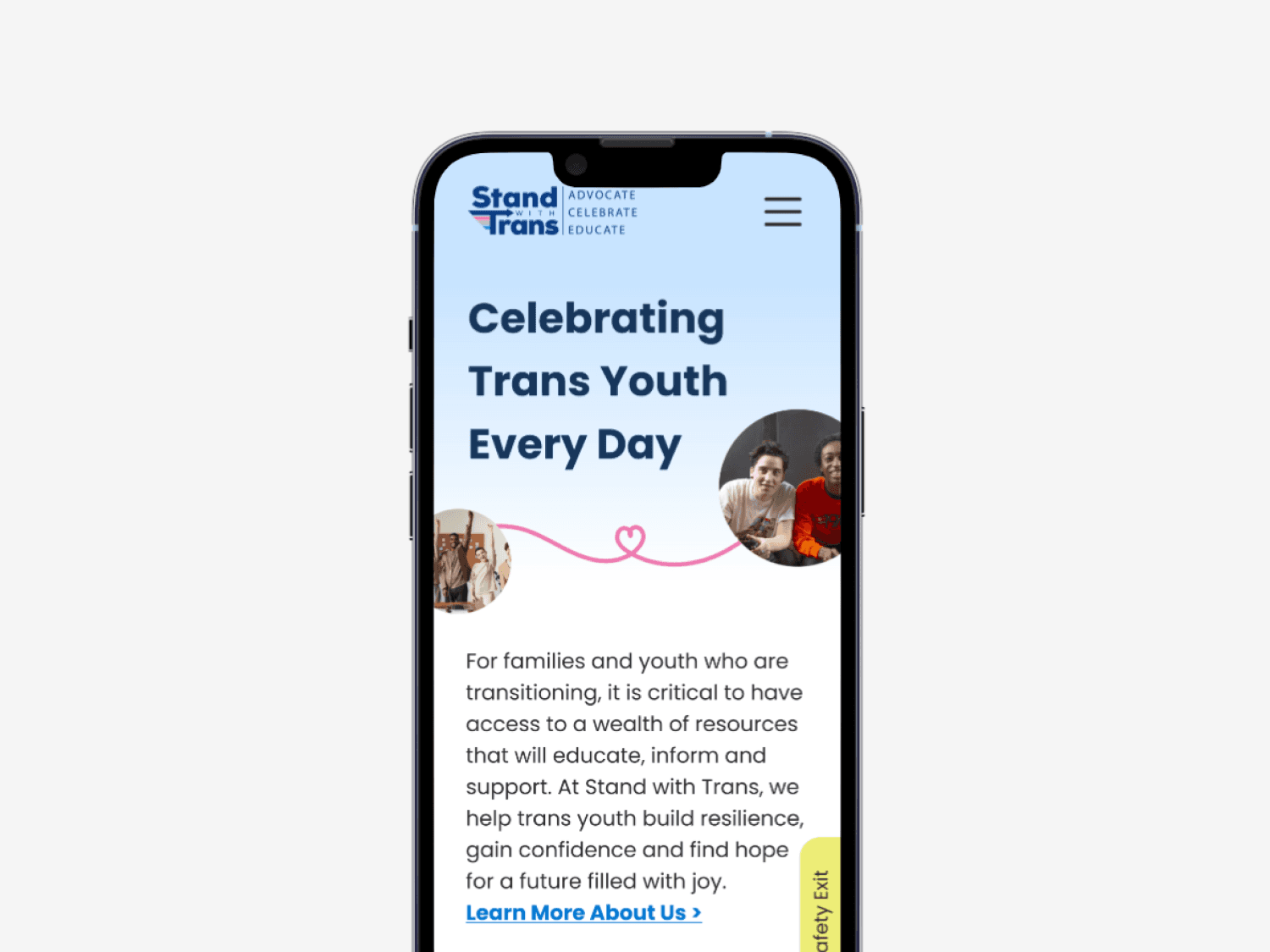
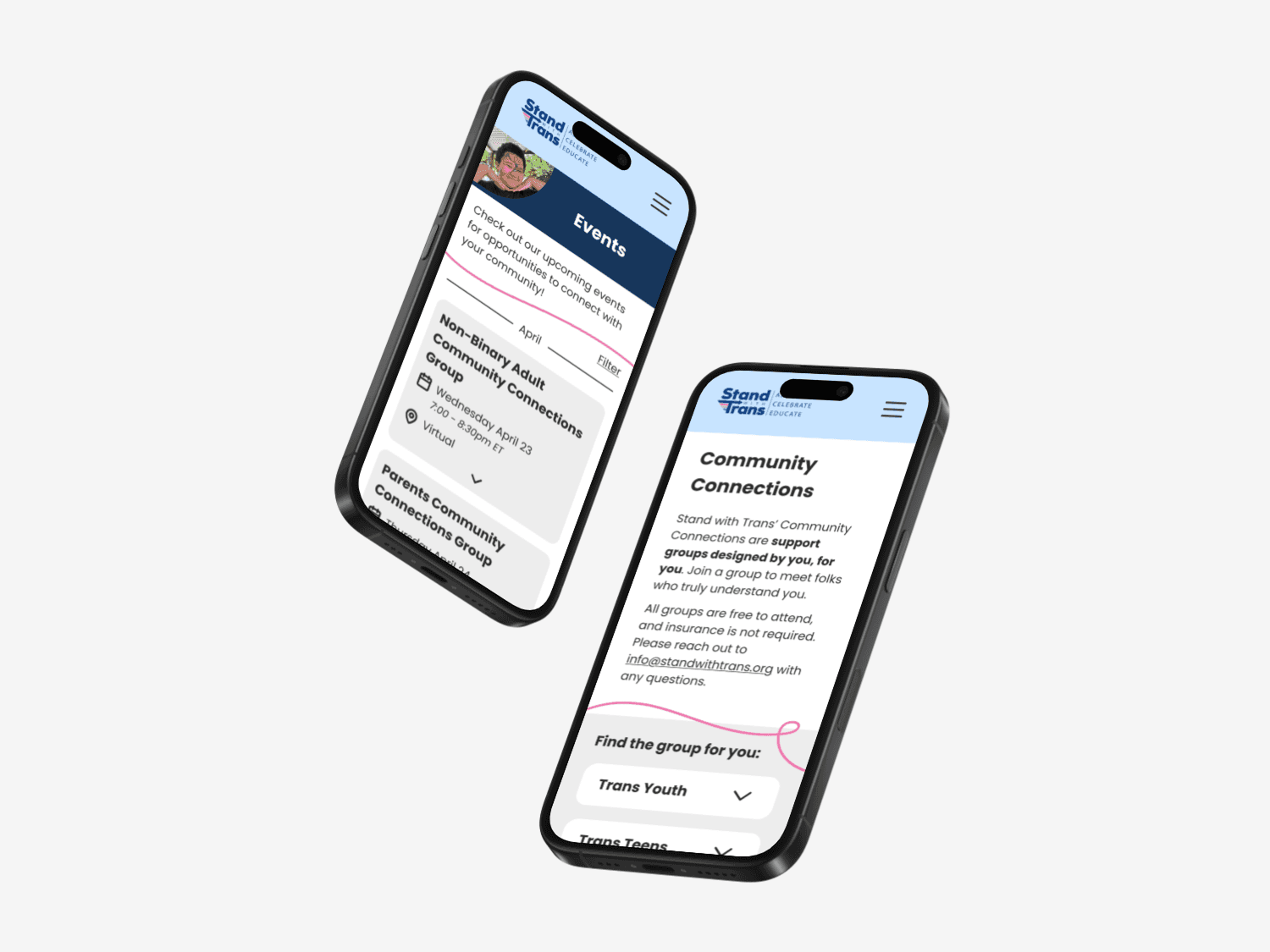
Introduction
Stand with Trans is a Michigan based non-profit organization that provides critical support to transgender youth and their loved ones.
When federal executive orders targeting trans people were signed in January 2025, Stand with Trans site traffic increased by 150%, but organizational issues on the site made it difficult for visitors to find life-saving resources.
Our team was tasked with tackling this problem as our undergraduate capstone project at the University of Michigan's School of Information.
Problem Statement
How might we support users in accessing Stand with Trans resources with confidence?
Research Questions
To anchor our research plan, we crafted three key research questions:
What aspects of the current website do users value and why?
What challenges do users face in navigating the current website?
How can users of the website best have their diverse and growing needs met?
Research Methodologies
Before beginning research, I arranged for our team to meet with Dr. Oliver Haimson, a leading scholar on trans technologies, to discuss conducting trauma-informed research with trans youth and adults. He generously shared valuable insights that we incorporated into our research protocols.
We used four research methods to better understand the Stand with Trans community's needs and experiences:
Accessibility Audit
I led accessibility testing of the website. I also analyzed the data and presented it to the client.
Comparative Analysis
We compared the website to those of related nonprofits. I analyzed the sites' event calendars.
User Interviews
We interviewed trans individuals and their loved ones. I facilitated 2 interviews and analyzed data.
User Testing
We conducted usability testing of the Stand with Trans website with both new and returning users.
Research Findings
After analyzing the data we collected, we identified three key insights from our research:
Users struggle to find relevant events due to a lack of filter functionality.
Users are overwhelmed by the number of options in the site navigation bar.
Theme colors on the site do not meet WCAG color contrast standards.
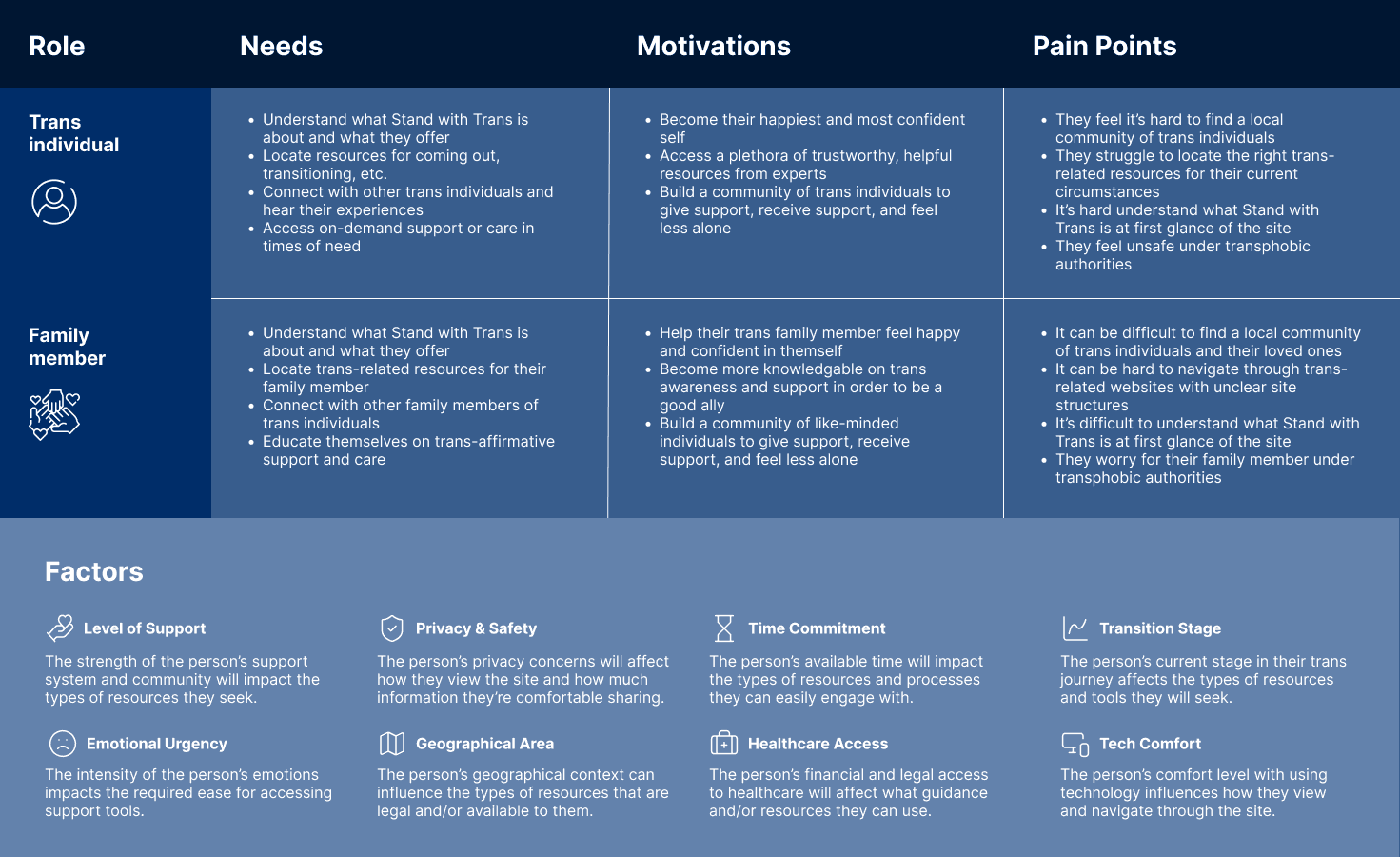
To ground our design process in our interview findings, our team also created a persona spectrum. Typical user personas often lead to over generalization, so we used persona spectrums as a more inclusive alternative:
Design Process
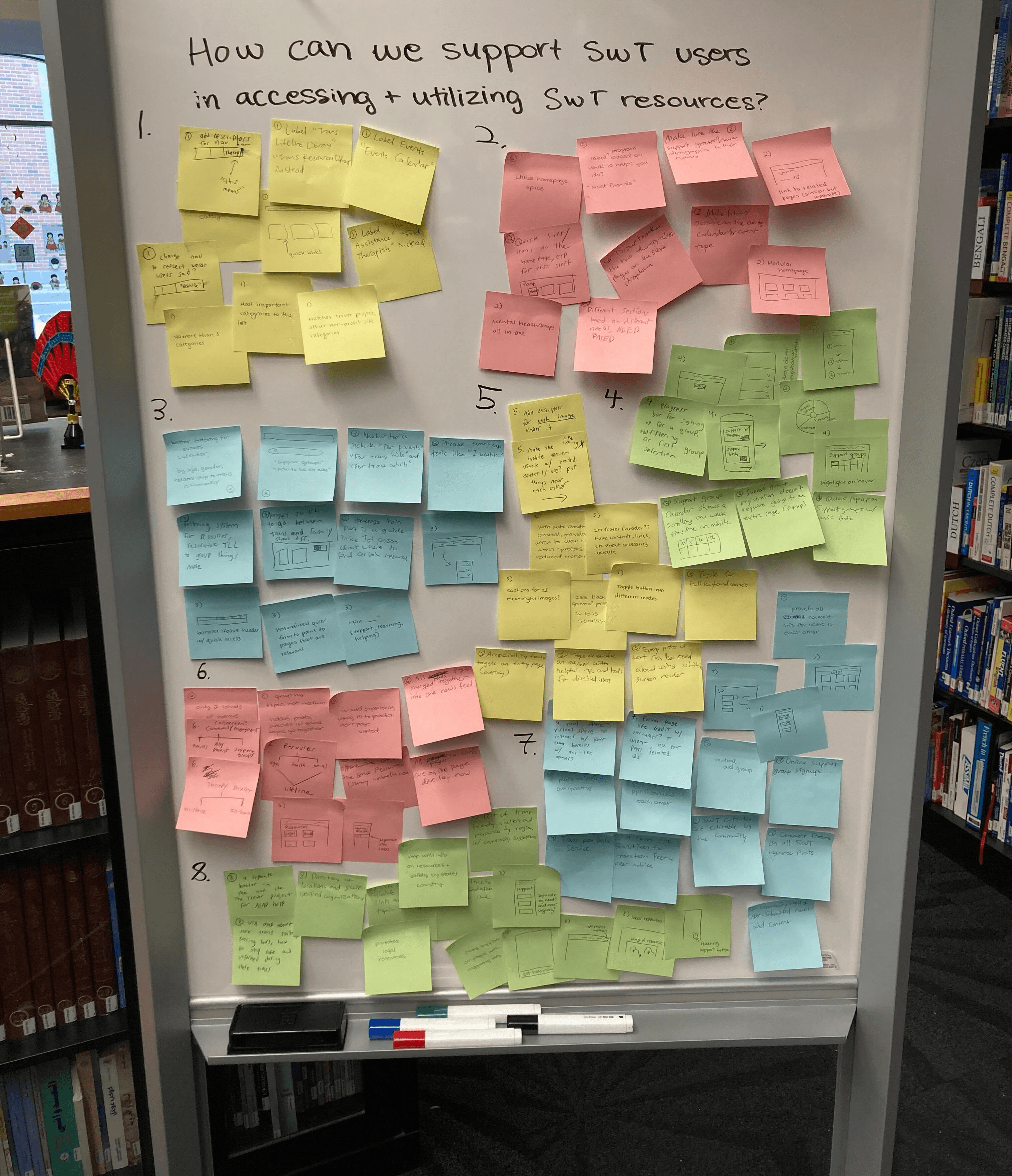
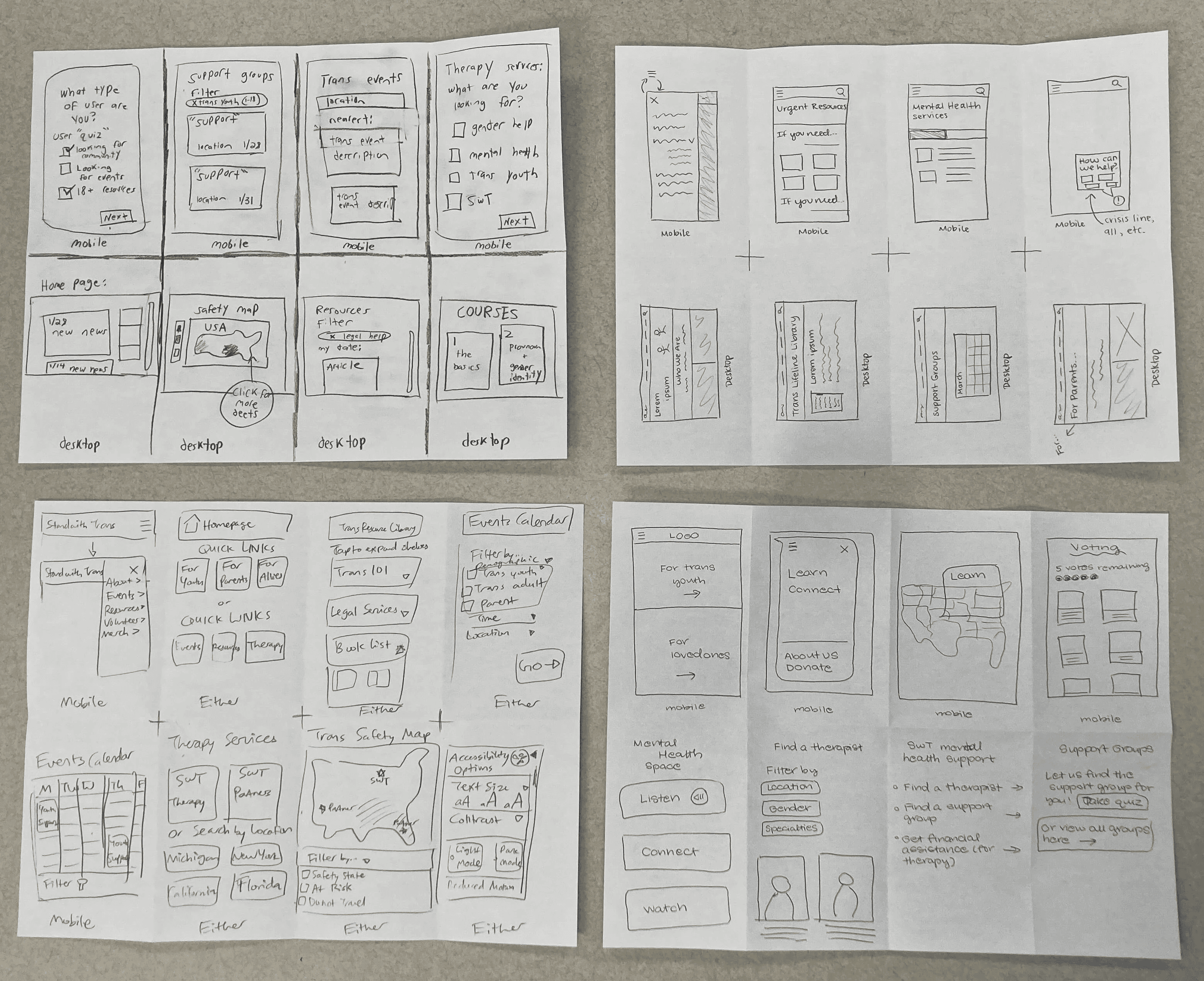
We began our design process with several brainstorming sessions grounded in the design requirements we developed from our research findings:
Redesigning Event Discovery
Following brainstorming, we began prototyping key features. I led design for the event discovery experience.
In our initial research, we found that users struggled to navigate the events calendar because it was 1) not optimized for mobile experience and 2) lacked filtering capabilities. I addressed these issues in the mid-fidelity prototype. Next I iterated on the design based on feedback from 36 users:
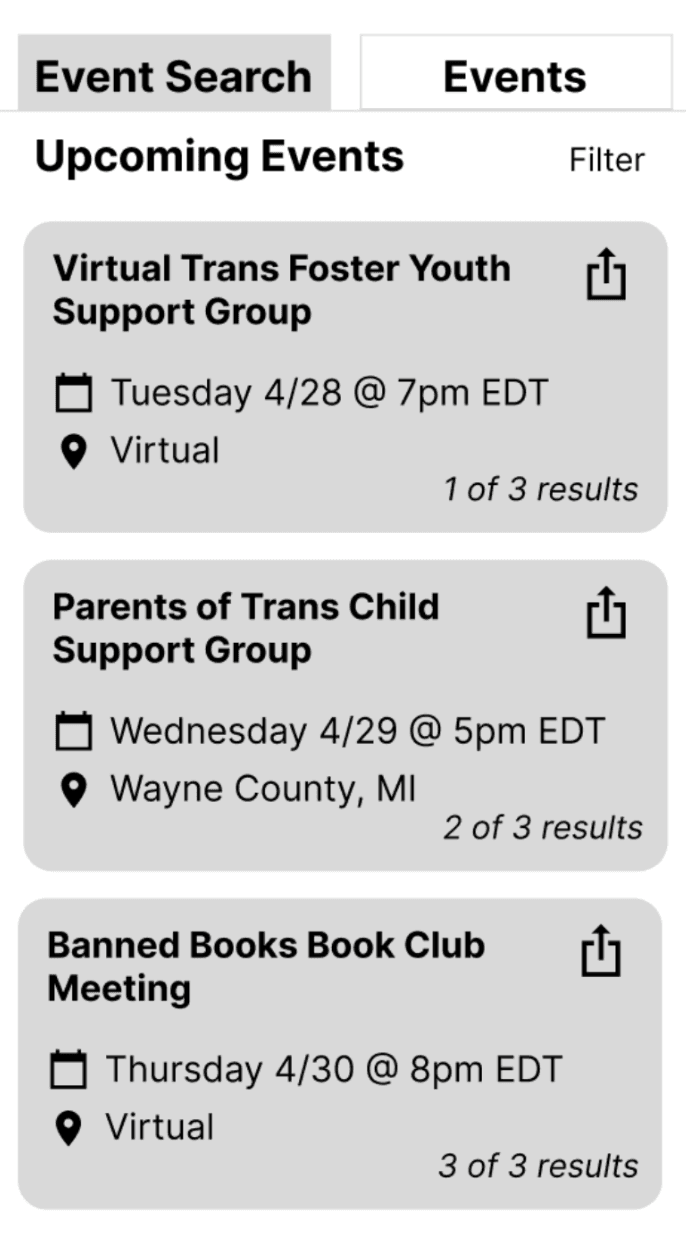
Mid-Fidelity Prototype

High-Fidelity Prototype
My Impact
Our evaluative study found users had a 2.6x higher success rate finding an upcoming event on my prototype, as compared to the original site.
Results
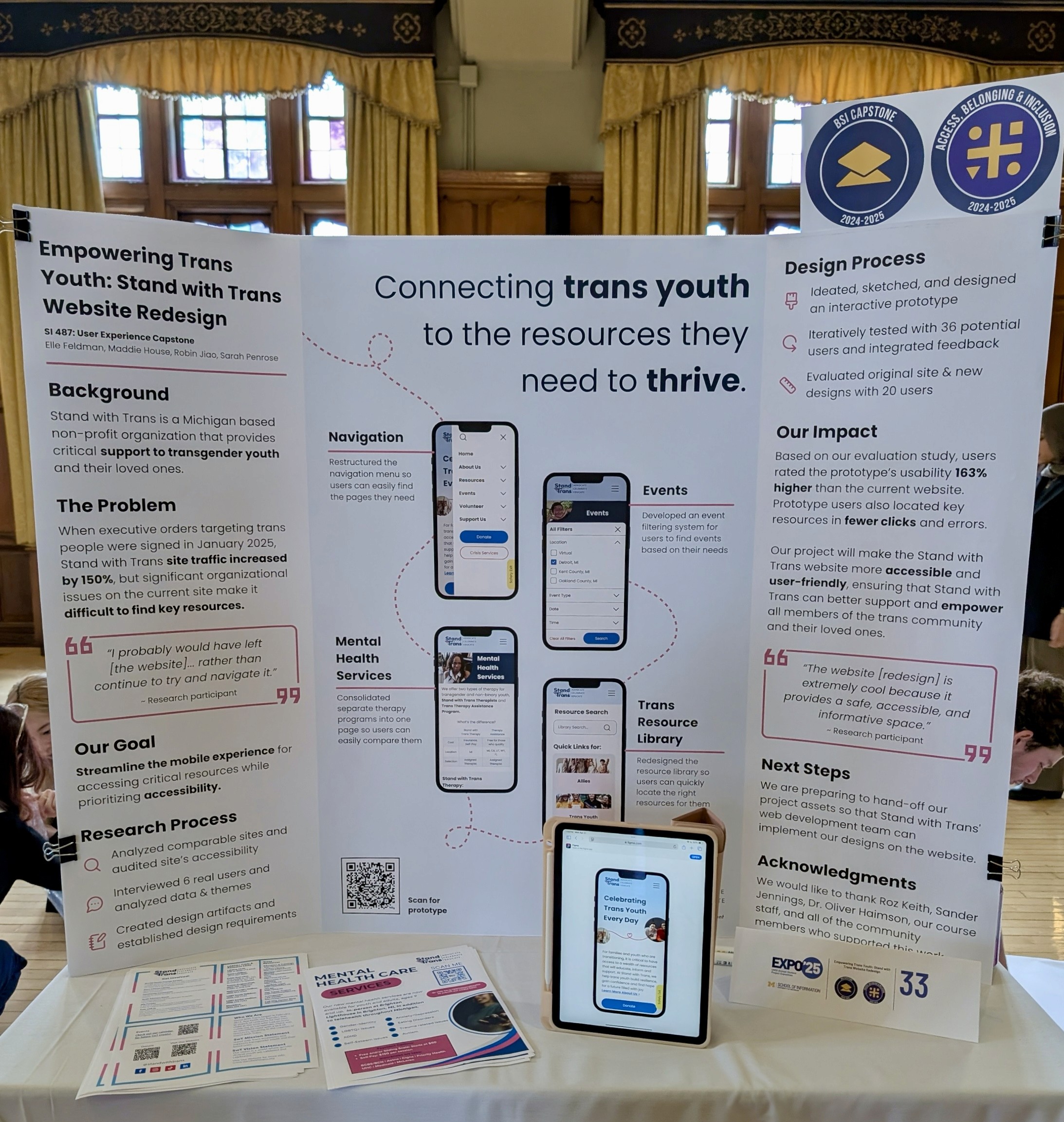
In all, our team redesigned four main features of the Stand with Trans mobile experience. In our evaluation study, participants rated the usability of our prototype 163% higher than the original website. Stand with Trans' leadership was thrilled with the results of our work and assembled a team of volunteer technologists to begin developing our prototype.
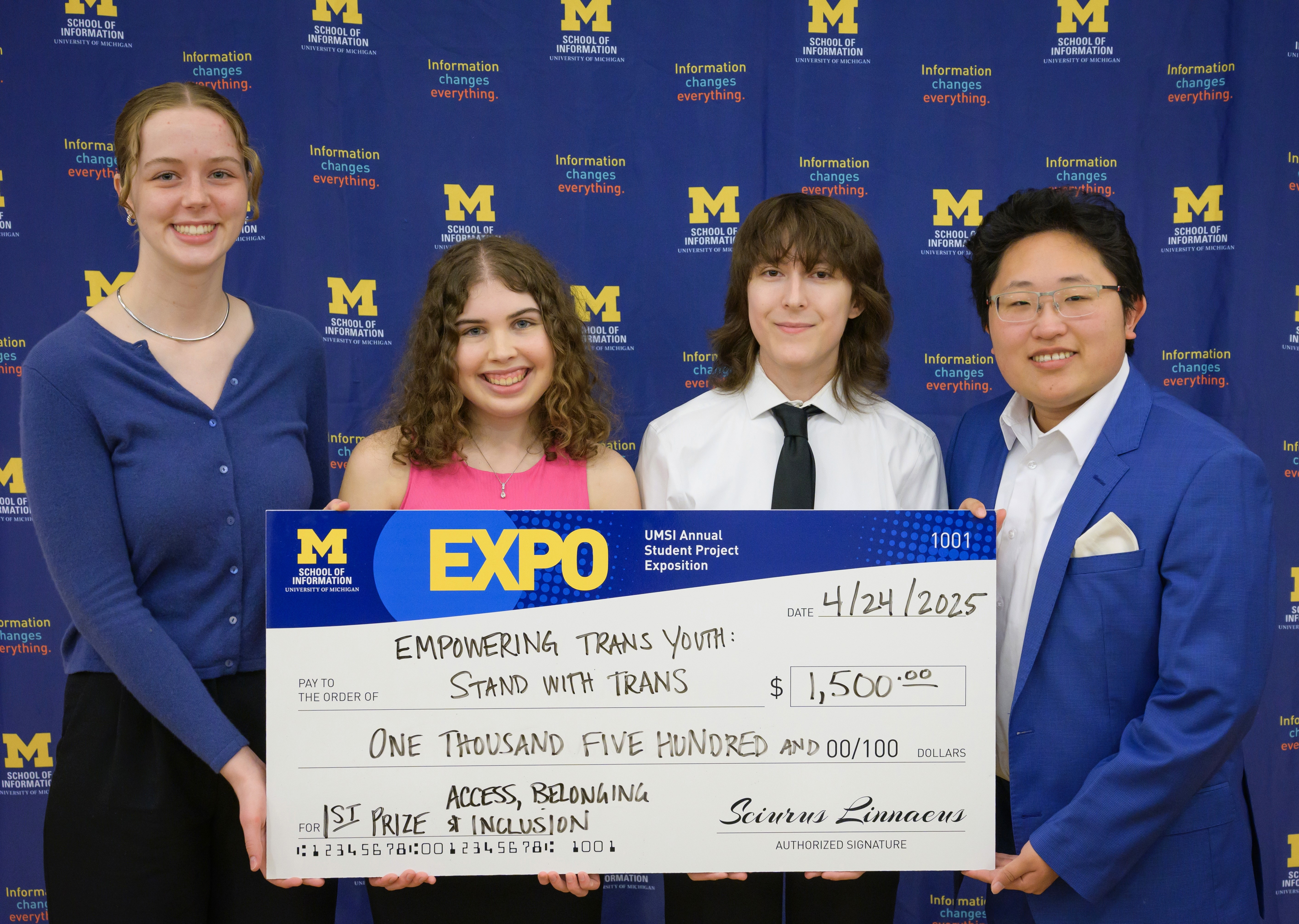
Additionally, we had the opportunity to present our work at the annual U-M School of Information Student Exposition alongside hundreds of our peers. We were honored to win 1st place in the Access, Belonging and Inclusion category!
Learnings
Working on this capstone project with Stand with Trans was deeply meaningful to me, both personally and professionally. I learned a lot that will influence my future work:
Question standard UX processes. I had always felt uneasy about the way user personas generalize diverse experiences, but I had not investigated alternatives. My team member Elle introduced me to persona spectrums and they played a key role in our research.
Center accessibility in research practices. I could have done more to make our research sessions accessible. This article on making human-centered methods accessible has revolutionized the way I think about inclusion in research and I am excited to implement these practices in future studies.
Continue to pursue values-aligned projects! I applied to work with Stand with Trans due to my passion for queer advocacy. Not only was this project deeply fulfilling because of that, but I also met wonderful people with similar values who became close friends.